The Golden State Flycasters is a dynamic organization that is both a traditional fly fishing club and a Trout Unlimited Chapter that covers eastern California from San Diego to Bridgeport. Efforts the chapter supports include conducting Southern Steelhead surveys in San Diego County, restoration work in the South Fork Kern watershed, and volunteering at the Hot Creek fish hatchery. To learn more about the Chapter and their activities we connected with Chapter President Dennis Rudloff.
TUCC: Tell me about the history of the Golden State Flycasters
Dennis: The Golden State Chapter was started by a gentleman named Pat Case who wanted a club associated with North [San Diego] County. Today, most of our member are North County residents. When the club got started, they saw an opportunity to become a TU Chapter, and TU was looking for somebody to represent them in Southern California.
How did you find out about the Golden State Chapter? What got you connected to it?
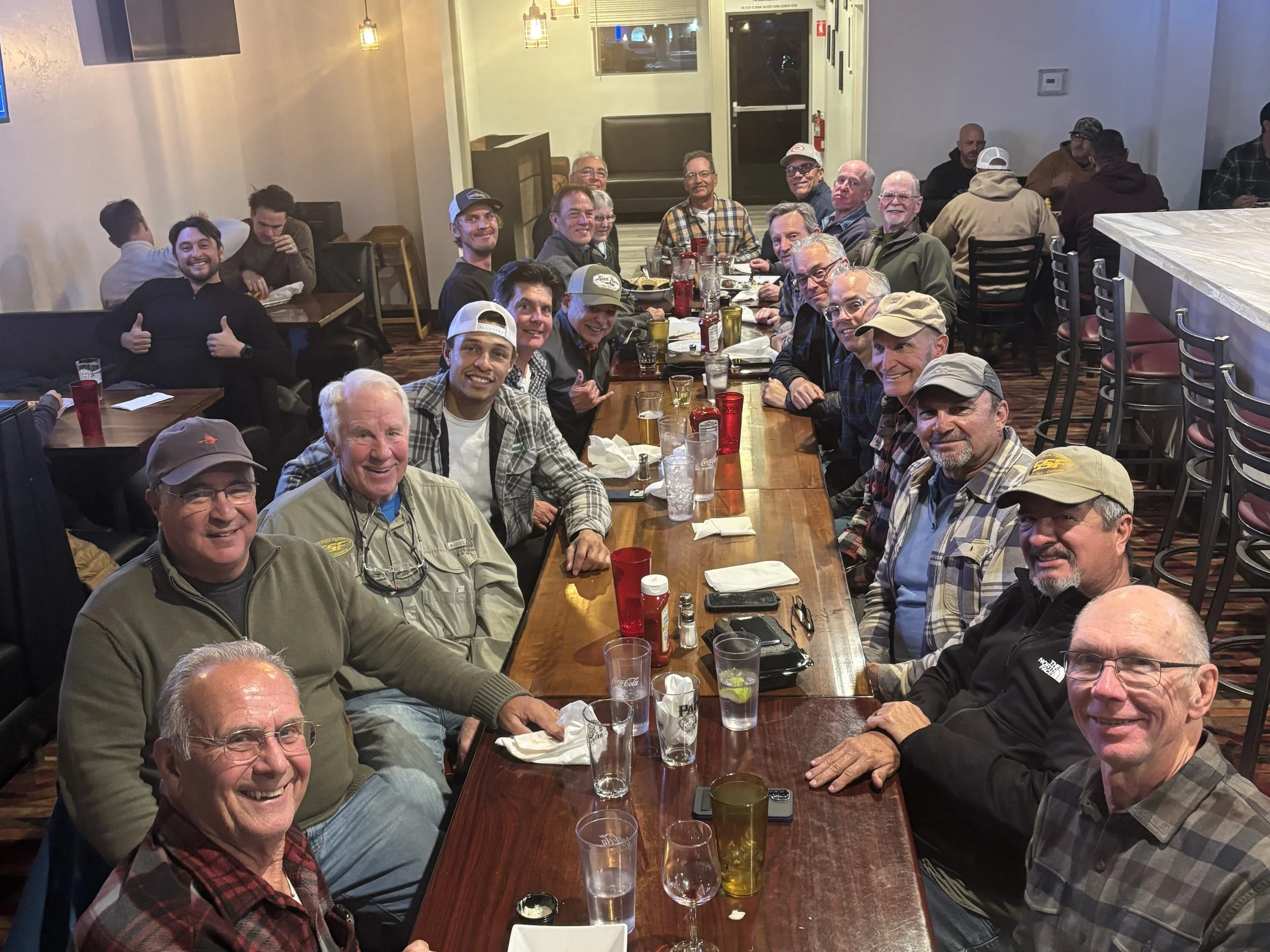
Chapter members enjoying their annual trip to Bishop, CA
I knew of the club for many years. On occasion, I would go to a meeting when I saw a speaker that looked interesting to me, but I was never a member. Four years ago, I went on a fishing trip by myself with a guide up on the McCloud River, and I came home, told my wife about how I was scrambling up and down these banks by myself. And it was like death defying. And then that's when she said, no, no, you have to join a fishing club. You can't go out fishing just by yourself. So I said, okay. And I just quickly hit the website, went to the next meeting and signed up. In that four years, I've gone from a member to the conservation chair to the president.
How did you get started angling?
As a kid, my parents would take me fishing offshore here in San Diego or maybe trout fishing somewhere in the mountains. Then my cousin, who lived in Oregon, became a fishing (trout and steelhead) guide. In 1980, he invited me to Oregon, where I caught a couple steelhead and then came home. My cousin sent me a nice new Orvis entry-level kit, you know, rod reel line, everything. But the funny part was that this was 1980s, and there was no Amazon or FedEx or anything. A guy knocks on my door and tells me I have this package and I'm like, oh, cool, look, it's from Orvis. And it's COD. Remember Cash on Delivery? So I'm scrambling around my house for the hundred bucks and who knows why I would have $100 on me. But I found it and paid the guy. And from that point on, I was into the fly fishing world.
What are some of the events that the chapter sponsors that you'd like to highlight?
Our club is involved in helping the CalTrout office here go out and keep an eye on our local three or four rivers and creeks, looking for potential steelhead to move up into those waters. So that was kind of our first kind of big conservation effort. They bought machines that sample the water to test their cleanliness for southern steelhead migration,. For us, it's kind of a big deal since Southern Steelhead appears both on federal and state endangered species lists.
We also have a particular individual in our club named Dale Dalrymple who spends time all over the Western states fishing and working on various conservation projects. He has been heavily involved working with TU and CDFW people around California and has been sort of the main guy that really carried the load.
When we had COVID, membership meetings fell off. Since people weren't going out together in the field we weren't able to kind of do our normal activities and missions. When I came on board, I started trying to rekindle the activity in the field. I got some insight from Dale and started leading people on walking tours of places like Santa Louis Rey River, Santa Margarita River, and San Mateo Creek. Those are kind of like the big three for us.
Who else besides Dale would you like to recognize for their efforts with the Chapter?
Within our club, we have a board of directors, and those folks for the most part, have been with the club for 10 plus years. I'd give a shout out to our treasurer, Don Fithian, because being a treasurer is practically a full-time job. He generally has his fingers on everything, and he's a guy that that has earned a lot of respect from fellow club members and board members. Don's opinions and ideas generally carry a lot of good weight.
What do you find to be the most effective communications methods that you are using right now?
I think the most effective is our email email distribution list. We have a monthly meeting, so information gets shared to whoever shows up, which is typically about 30 people.We also have a mailing list of our 140 members and another 250 names of people who came to a meeting, signed up for an event, never actually joined the club, but have expressed interest in fly fishing.
When I took over the presidency, I didn't think we were communicating enough with members, so I started a monthly president's perspective email. I volunteer for CDFW so I tend to have some information about what's going on in the fish and wildlife world. We also use it to advertise any kind of film festival or events in town and the four or five trips we have each year. We also re-initiated our newsletter, which was a nice document we last produced in 2017. I found a volunteer who had the right skills to be able to use a document development tool. We solicit inputs and articles and pictures from people with events to share.
So our newsletter and our president's perspective email are probably the best things. And of course, every one of our meetings and events gets multiple email blasts. So if we have an upcoming meeting, there'll be one or two emails out to all 400 people. When we have a trip planned to go up to, say, Bishop or Bridgeport, it gets advertised that way. We also have a Facebook presence.
I'm pretty convinced that the more I can connect people of the club together, the more they'll appreciate the club.
What events are you looking forward to in 2026?
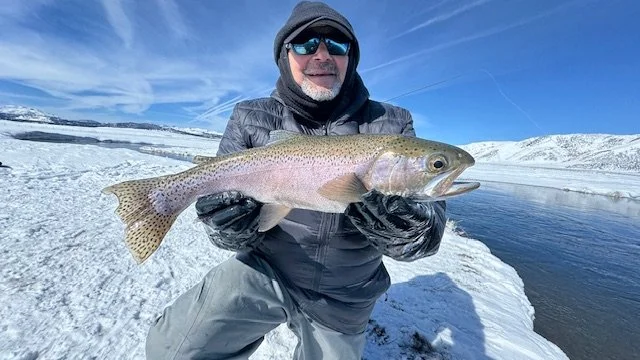
Finding big Rainbows in the Upper Owens
Our winter trip to Bishop this year was a big success. We have a carp outing coming up, and our annual summer BBB (Beach, corBina, and Breakfast) event. We have three or four volunteers who put on a big breakfast spread. We show up at about 5:30, fish for a few hours, and have some breakfast. We haven't caught a Corbina yet, but we keep trying.
What do you see as the biggest challenge for your club going forward?
Oh, that's such an easy one. That is the club aging out. I've never actually calculated, but I'm 70 and I'm going to say that most of the members are as old as or or older than I am. At the TU Western rendezvous in Missoula last month they had a whole breakout session focused on age 40 and under. I'd be happy we had 50 and under.
Anything else you'd like to share?
I'm very excited about the TU half of our club. I have been I have been very vocal around encouraging our members to go to the TU website and complete petitions to their local elected officials about issues like the Roadless Rule and Clean Water Act and potential mining near Hot Creek, which is our local neighborhood water even though it's 300 miles from San Diego. Dan Johnson [Trout Unlimited Manager, CA/NV Public Lands] and I talk about this all the time. So since most of our guys are retired if we get a couple weeks' notice of a public meeting at the Bishop Tri County Fairgrounds and they're taking public comment about the application for core mining work, I'm going to rally people to drive up there and physically show up.
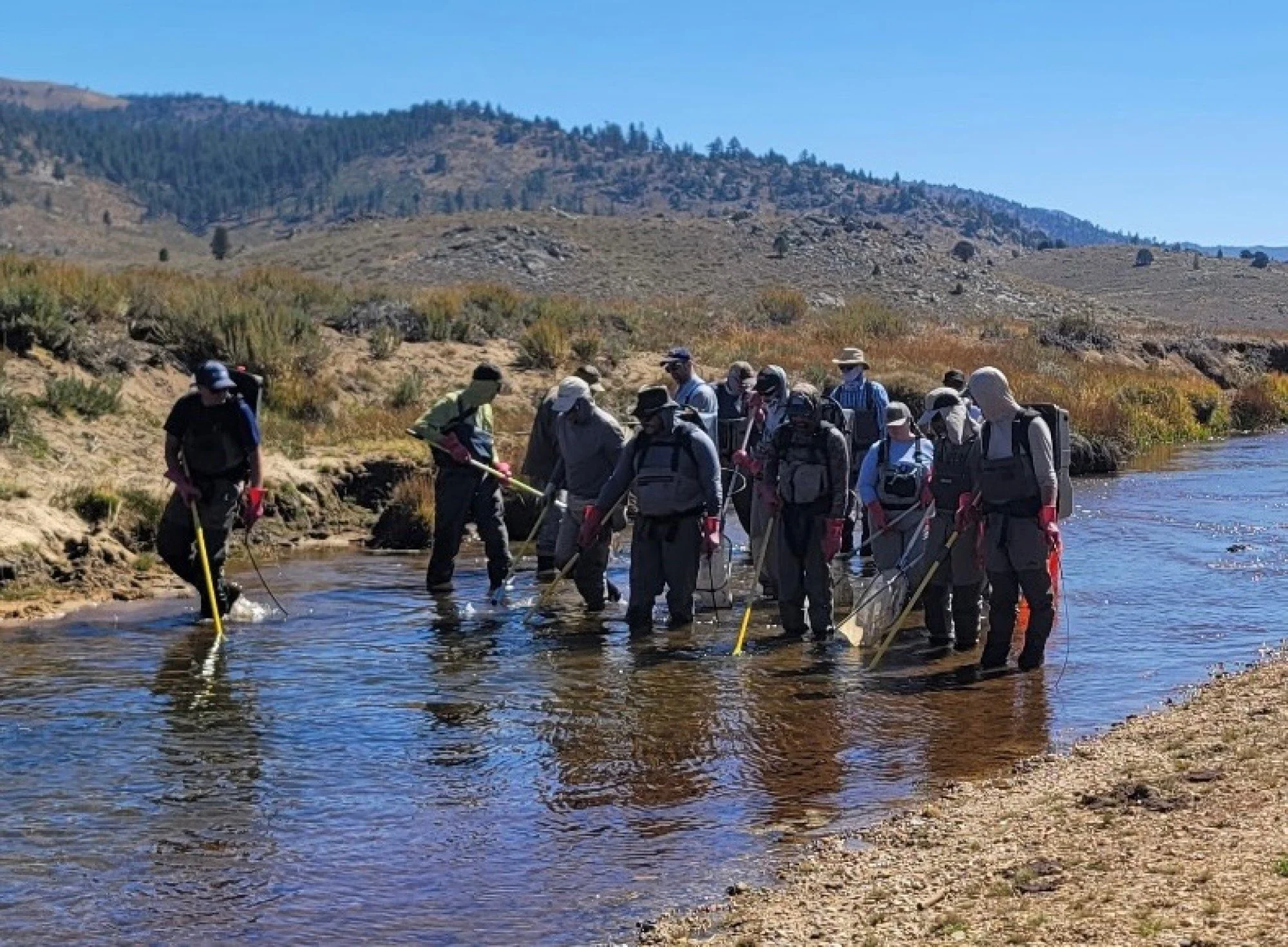
Removing non-native Brook and Brown Trout from the South Fork of the Kern in Monache Meadows
You can find the chapter online at the Golden State Flycasters website and Facebook Page