The territory that the Shasta Trinity Cascades Chapter of Trout Unlimited represents includes some of the most diverse and productive trout, steelhead, and salmon waters in the state. We talked with Chapter President Andrew Harris to learn more about the Chapter and its activities.
TUCC: Can you can you tell me a little bit about the history of the Shasta Trinity Cascades Chapter of Trout Unlimited?
Andrew: About 10 years ago some of the members of the Shasta Trinity Fly Fishers club decided that they wanted to get more involved in conservation. They formed the Shasta Trinity Cascades TU chapter to become the conservation committee of the club. I was invited by one of the board members of the new TU chapter to get involved a year or two after that and then I started attending meetings and got on the board and I've been an officer on and off for a while now.
How did you get started angling?
I’ve fished since I was a kid. I got into it with spinning gear and bait and trolling in reservoirs during the summer when I was able to do a little fishing. When I got my driver’s license I was able to get to some smaller streams and experiment with fly fishing. I was self-taught for the most part and quickly became heavily interested in the sport. I went to the Clearwater House on Hat Creek guide school when I was a junior in college. I started guiding a bit that summer and became a full-time fly fishing guide after graduating from UC Davis.
The Shasta Trinity Cascades Chapter covers a wide range of fairly sparsely populated California. Where do most of the chapter members live?
When we look at our roster we see that members are from all over. We cover pretty much everything north of the Feather River drainage to the Oregon border and east to the Nevada border plus the coastal range including the Trinity and Klamath. Redding is where we have our meetings and where most of the active membership lives. During Covid we did Zoom meetings and we had some involvement from people from as far away as Susanville and Weaverville. Now that we're back to normal in person meetings, most of our involvement is from members in the Redding area.
What are some of the chapter’s signature activities that the chapter has done the last few years?
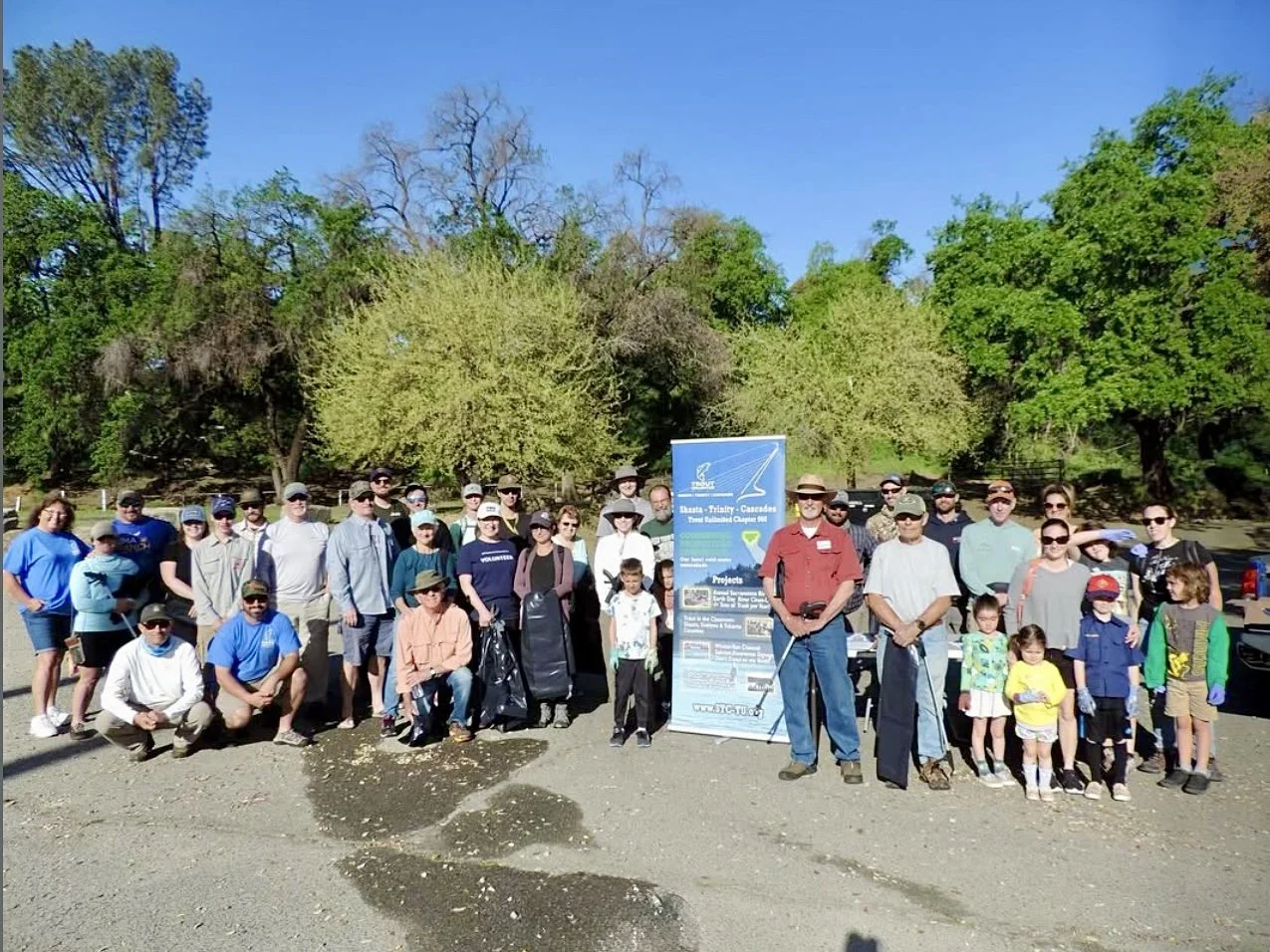
Lower Sacramento River Cleanup volunteers
Our signature event where I think most people hear about us is our annual lower Sacramento River cleanup. We typically do it on a weekend day in April and it's an event where anybody can come. You don't need a boat. We have a lot of people show up with drift boats and jet boats and a lot of people walk the banks. We focus on cleaning up the river as best as we can. It gets the community involved and we get good participation.
Who are some of the folks you consider key to the chapter that makes these events happen?
The entire board is heavily involved in orchestrating events like the cleanup. Our board includes Curtis and Roberta Cole, Michael Caranci, Creighton Smith, Andreas Fuhrman, Josh Markle, Dan Rhodes, April Brown, Bryan Quick and Jim Wigington.
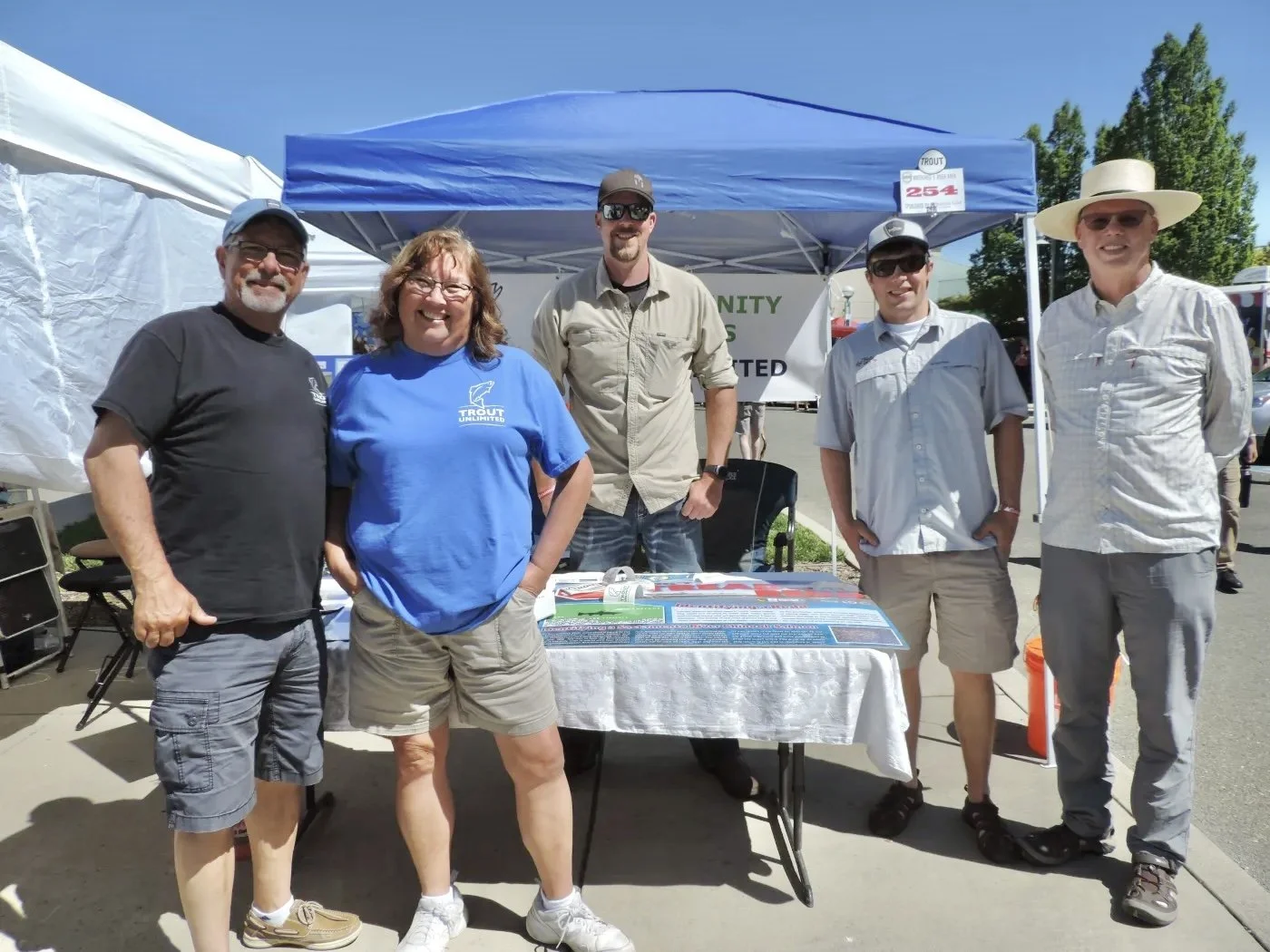
TU STC volunteers engaging the public
It sounds like you get great participation in the spring cleanup beyond just the board members. What would you say are the most effective methods for reaching your members with news and announcements?
I'd say it's a mix of email newsletters and social media, primarily Facebook and Instagram. Our email mailing list includes both Chapter members and other local folks who are interested in what we do.
Are there other events you do to engage people?
We have an annual fly fishing film tour event that we do every fall that is well attended. We've used different ones over the years and the one we use now is the International Fly Fishing Film Festival (IF4). We hold the event at the Cascade Theater in Redding, which is a great venue -- it’s a super fun place to see the show. That's our big fundraiser, and we get to make our pitch to folks attending and remind them why we're doing what we do. This big event allows us to focus our fundraising on one annual event, so we don't have to really worry about it the rest of year.
Has the Chapter done any stream restoration projects?
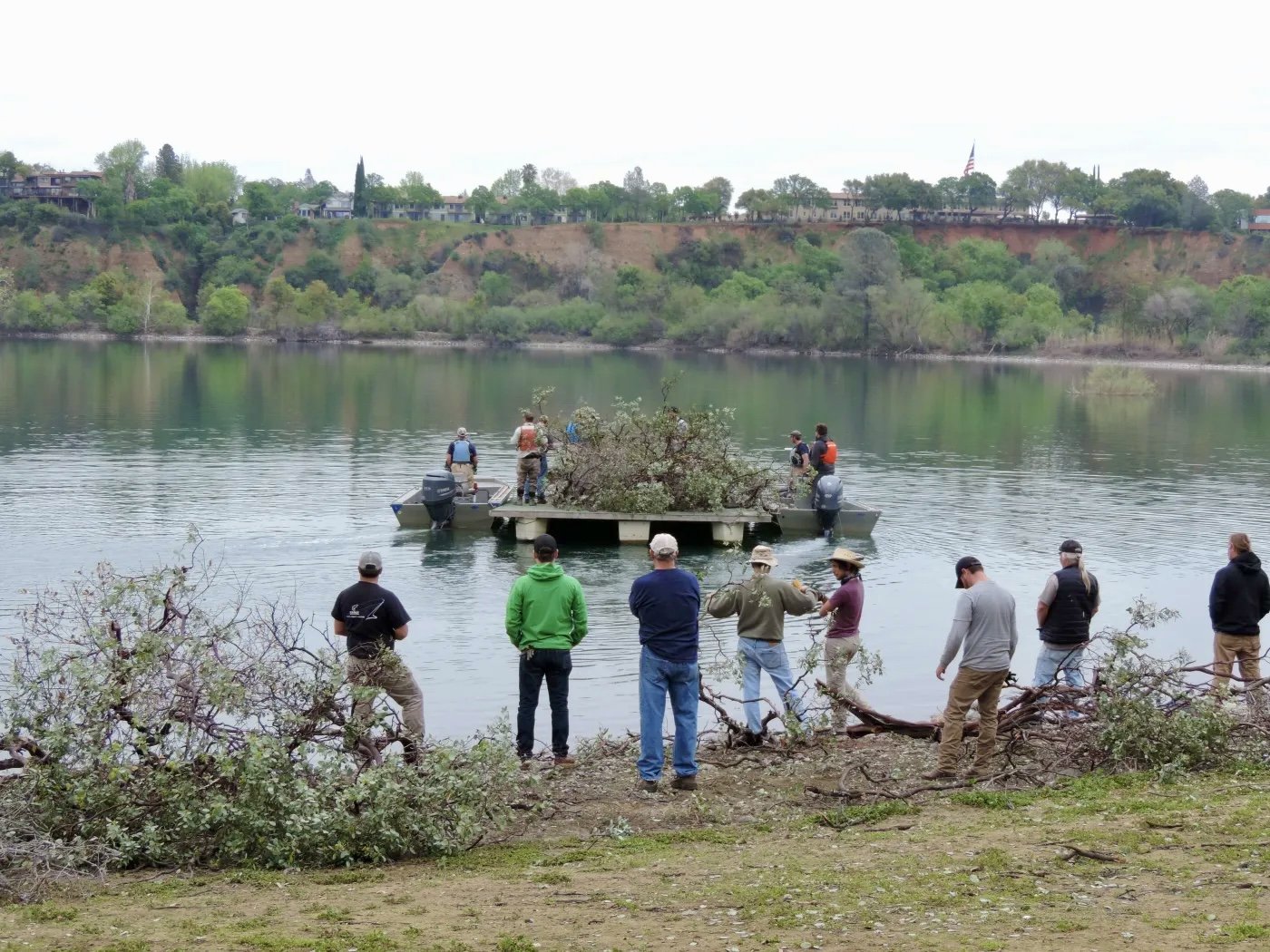
Adding habitat for winter run Chinook Salmon smolts
Yes. We did one in a backwater area of the Sacramento River where we helped install woody debris to create habitat for winter run Chinook smolts. We did another project on a small stream that flows into the Sacramento River above Redding where we removed many truckloads of Carr Fire sediment that would have washed down into the river. We're always searching for projects like that. It’s challenging for us to do in-river projects because we’re dealing with rivers that have endangered species like winter run Chinook or threatened species like steelhead. For us to do anything in-stream requires a lot of help and coordination with state and federal agencies.
What are some of the other priorities for the Chapter?
A big year-round focus for us is advocacy. Through our advocacy we have been able to positively affect a lot of local projects that are being implemented by third parties. For example, there are a lot of projects being done on the Sacramento river to improve habitat for endangered winter run Chinook salmon. Many of these projects are designed to create more side channel habitat for the young fish. Our primary concerns with these projects include maintaining and improving public access and making sure we address issues for any trout fisheries that might be affected. The side channel projects are a big deal for our chapter and it's great that the local and state and federal agencies reach out to us on these and solicit our input. We also do a fair bit of advocacy around fishing regulations.
Our Chapter also has a focus on the local guiding community. Guiding is a huge deal in our area since people come from all over to fish here for trout and steelhead on our local rivers. Many of our members are folks who work in the fly fishing industry as guides and outfitters. I am an outfitter (Confluence Outfitters) and Bryan Quick, one of our board members, is the head outfitter at The Fly Shop in Redding. The guiding community is important to our chapter so we pay close attention to proposals and projects that might affect the guides and outfitters. Those of us in the fly fishing industry have opportunities to share our conservation values with our customers – that’s something that I aim to do better at in my own business.
What do you see as your biggest challenge going forward as a chapter?
Maintaining engagement and involvement. We have an interesting mix of working age and retired folks on our board which is great, but we need to keep the new people coming in. We really need to grow the active part of our chapter.
Anything else you'd like to share?
I think we’d like to see more volunteer opportunities built- in to some of TU’s big projects. We are always looking for opportunities to do hands-on work to support our local coldwater resources.